The names are useful only when the scope is written
Builders and cleaners may use the terms rough clean, final clean and touch up clean differently. The label alone is not enough for pricing or acceptance. Each stage should identify the rooms, surfaces, site condition and expected result.
A staged plan is most useful when it follows the actual construction program.
Rough clean
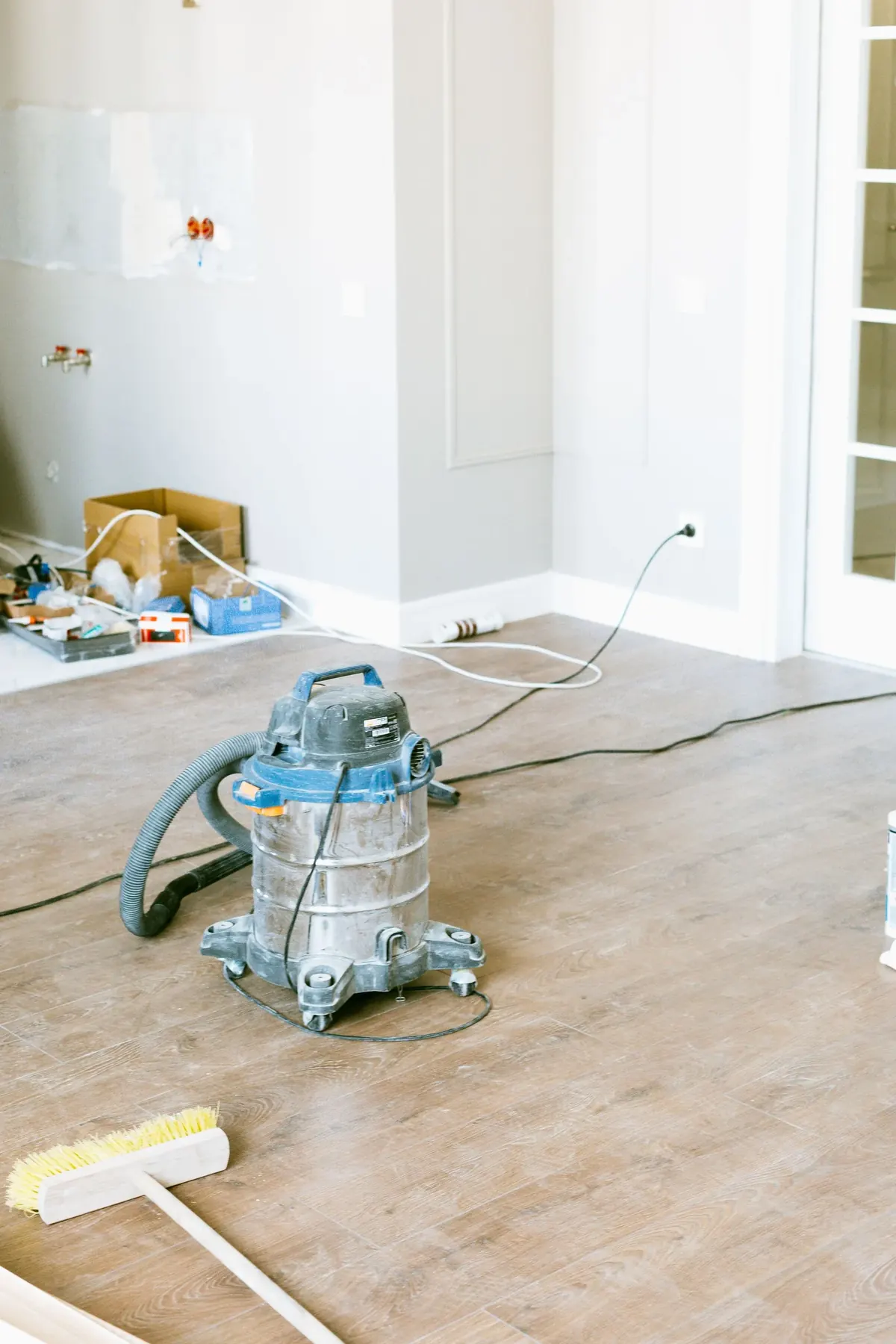
A rough clean generally occurs before the property is ready for final presentation. It may focus on making work areas clearer for the next stage, but it should not be confused with demolition waste or a site waste service.
Depending on the project, a rough clean may include agreed removal of light packaging, vacuuming accessible dust and preparing areas for finishing work. Large debris, skips, sharp materials and trade waste remain the responsibility of the appropriate site contractor unless specifically arranged.
Final clean
The final clean occurs when the main trade work is complete and the building can be prepared for inspection, photography or handover.
It may include detailed dust removal from reachable surfaces, cleaning floors, cabinetry, fixtures, bathrooms, kitchens and agreed glass. Stickers, protective film, paint spots, silicone and construction residue need to be identified because the removal method and risk vary by material.
The site should be cleared, safely accessible and supplied with suitable power, water and lighting.
Touch up clean
A touch up clean occurs after the main final clean when minor dust, fingerprints or marks have appeared during defect work, styling or final inspections. It is not a second full builders clean.
The scope should identify which areas will be revisited and how much time is allowed. If trades create substantial new dust or debris, the work may need a revised quote.
Active dust needs proper control
Presentation cleaning should not be used as the control for ongoing cutting, sanding or grinding. Safe Work Australia states that construction dust must be assessed and controlled, with higher order controls considered before personal protective equipment. See the official construction dust guidance.
Hazardous or suspected silica dust requires site controls and may need specialist assessment before ordinary cleaning can begin.
Put these details in the work order
- Cleaning stage and required date
- Rooms and surfaces included
- Site readiness requirements
- Residue or protective material to be removed
- Glass and high access boundaries
- Waste responsibility
- Reporting and acceptance process
- Treatment of trade re-entry and extra work
Tas Clean Solutions reviews completed, cleared sites before quoting final builders and post renovation presentation cleaning.