
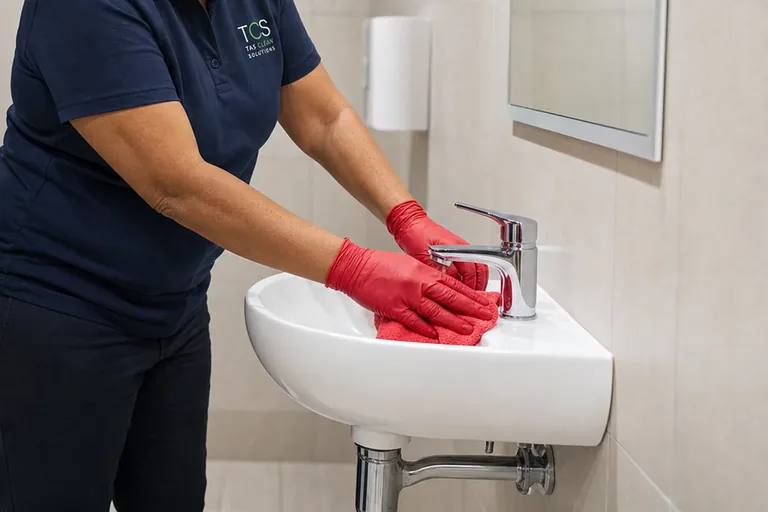
Keeping workplace bathrooms and kitchens stocked needs three clear decisions: which products fit the premises, who supplies them, and when they are checked and replenished. A shelf of spare paper is useful only if someone knows when to refill the dispensers and when to order more.
You can manage the purchasing yourself or include supply and restocking in your cleaning arrangement. Either way, a short product list and an agreed stock check make the job easier to maintain.
List the products by location
Walk through each bathroom, kitchen and other included area. Record what is used there and where the reserve stock is stored.
Common items to discuss include:
- Toilet paper in the size and format the holders take.
- Paper towels suited to the existing dispensers.
- Compatible hand-soap refills.
- Bin liners that fit the actual bins.
- Agreed kitchen basics, such as dishwashing products.
Be specific enough that a replacement can be identified without guessing. A product name, pack size and photo of the label or dispenser can help. Different-looking packs may contain different quantities, so “one box” is not always a useful unit for checking stock.
Check compatibility before changing products
A lower-priced refill is not useful if it jams, does not fit or requires a different dispensing system. Confirm the dispenser model and suitable refill before placing an order or approving a substitute.
Keep the relevant product and dispenser instructions available. Where a dispenser is broken or leaking, report the fault rather than treating repeated refilling as the solution. Dispenser repairs are outside our consumable-restocking service.
Restocking also needs to fit the wider workplace setup. WorkSafe Tasmania’s work environment and facilities code covers toilets, handwashing and other facilities. A stock checklist is a practical part of caring for those spaces; it is not an assessment of all workplace requirements.
Separate buying, storing and refilling
These are three different jobs, even if one provider handles all of them.
If your business purchases supplies, agree who receives deliveries and who tells the buyer stock is low. The cleaner needs access to the correct cupboard and clear instructions about which stock can be used.
If supply is included in your cleaning arrangement, confirm the products, quantities, pricing and replenishment schedule. Decide how a product change will be approved and what happens when the preferred item is unavailable.
Tas Clean can supply and restock workplace consumables or replenish from stock you already keep on site. We put the arrangement into your plan so the responsibilities and full price are clear.
Choose a reorder point using actual use
A useful starting calculation is the amount normally used while you wait for a delivery, plus a reserve for a busier period or a delay. If stock is checked only weekly, also allow for the time between checks. Review the starting quantities against what the workplace actually uses.
For example, imagine a site uses two packs of paper towels between weekly checks. If delivery can take another week, finding only one pack left at the next check is already late. The site needs enough remaining stock to cover that delivery window, with a sensible reserve. These numbers illustrate the calculation; they are not a recommended quantity for every office.
Count stock in one consistent unit, such as unopened packs. Record opened stock separately if that helps avoid treating a nearly empty box as a full one.
Match checks to the busy parts of the week
Staff numbers are only part of the picture. Visitors, training days, events and shared facilities can change consumption. Tell the cleaner about a large meeting or an unusually busy week so it can be considered in the plan.
Agree how supplies are checked between cleaning visits if the workplace needs more frequent attention. A weekly delivery, a weekly stock count and a daily dispenser refill are different schedules. Writing them separately prevents gaps.
Keep the handover simple
One short record can show the area checked, product running low, quantity left and person responsible for replenishing it. Decide how that note will reach the person who can act on it.
Store reserve products in the agreed location, clear of walkways, and make sure the person restocking can reach them safely. Review the list when dispensers, staff numbers or cleaning frequency change.
Bring supplies into the cleaning plan
For your workplace in Hobart or Launceston, send the number of bathrooms and kitchen areas, product or dispenser photos, preferred brands and whether you want supply included. We can discuss consumable supply and restocking alongside your regular cleaning.
Our guide to office cleaning inclusions explains how the wider tasks fit together. Request a consumables and cleaning quote to put the products, schedule and price into one clear arrangement.