
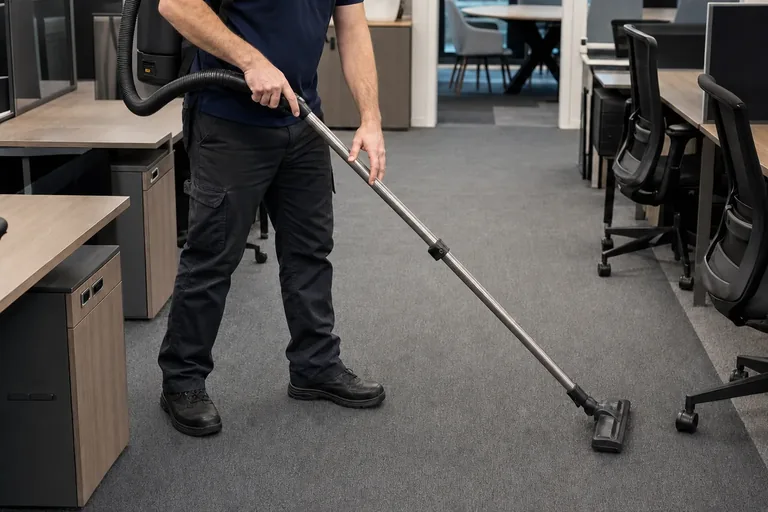
For most offices, the better cleaning time is the one that gives the cleaner reliable access to the rooms that need attention without interrupting the people using them. After-hours cleaning can suit a busy reception or open office. Daytime cleaning can work well when there are predictable quiet periods and someone available to provide access.
Neither option is automatically better or cheaper. Start with the way your workplace actually runs, then agree a cleaning window that leaves enough time for the full job.
When daytime cleaning works well
Daytime visits are worth considering when part of the workplace is regularly empty, staff can move between rooms, or the building requires someone to admit contractors. Questions can be answered on the spot, and access does not necessarily require a separate key and alarm arrangement.
The main issue is overlap. Vacuuming beside a video meeting, cleaning the kitchen during lunch or closing the only toilet during a busy period can interrupt work. A daytime plan should name the order of rooms, rather than just an arrival time.
For example, a small office might make a meeting room available first, leave the kitchen until after lunch and clean reception during a quieter appointment window. This is a planning example, not a fixed service schedule: the useful detail is when each area becomes available.
When after-hours cleaning makes more sense
Evening or weekend visits can give better access to desks, corridors and shared facilities when staff and visitors have left. They may suit an office with continuous phone calls, customer appointments or a kitchen that stays busy throughout the day.
Check what “closed” means for your building. One business may finish at five while another tenant works late. Lifts, car parks and automatic doors may follow different hours. A cleaner arriving after reception closes still needs a workable way to reach the premises and leave securely.
Tas Clean can arrange flexible office cleaning, including evenings and weekends. We confirm the proposed days, access and start date with you before booking.
Write down the arrival and lock-up arrangements
An after-hours handover should cover:
- The approved entrance, parking and any lift restrictions.
- How keys or access cards will be provided and returned.
- Which rooms are included and which must remain locked.
- Who to contact if the alarm behaves unexpectedly or someone is still working.
- Which doors, windows and lights need checking on departure.
- What changes during public holidays, shutdowns or late meetings.
Share actual alarm codes through the agreed private contact method, not in a public checklist. Explain the rules for confidential papers and equipment too. A clear desk-cleaning instruction avoids uncertainty about what may be moved.
Give floors a suitable cleaning window
Think about who will walk through an area while it is being cleaned and while it dries. The order of rooms, pedestrian access and the method used matter as much as the time on the clock.
WorkSafe Tasmania’s slips, trips and falls guidance identifies wet floors and obstructions as risks and recommends procedures for cleaning and reporting spills. Discuss those arrangements during the site visit, especially where staff, customers or other tenants share the entrance.
A mixed schedule can be the practical answer
You do not have to fit every task into the same window. A workplace could have its main clean after closing and arrange a separate time for agreed kitchen detail or a larger periodic clean. Another may suit daytime visits throughout the week.
Keep the scope consistent when comparing options. Ask whether each proposal covers the same rooms, routine detail, frequency and consumables. Our guide to office cleaning costs explains why comparing a single hourly figure can miss part of the picture.
Choosing a schedule for your workplace
Send us your opening hours, quieter periods, preferred days and any building access rules. We can review the site and suggest a workable office cleaning plan for your premises in Hobart or Launceston.
If you are still deciding how many visits you need, read our guide to office cleaning frequency. When you are ready, request a free office cleaning quote and tell us which times would suit your business.