
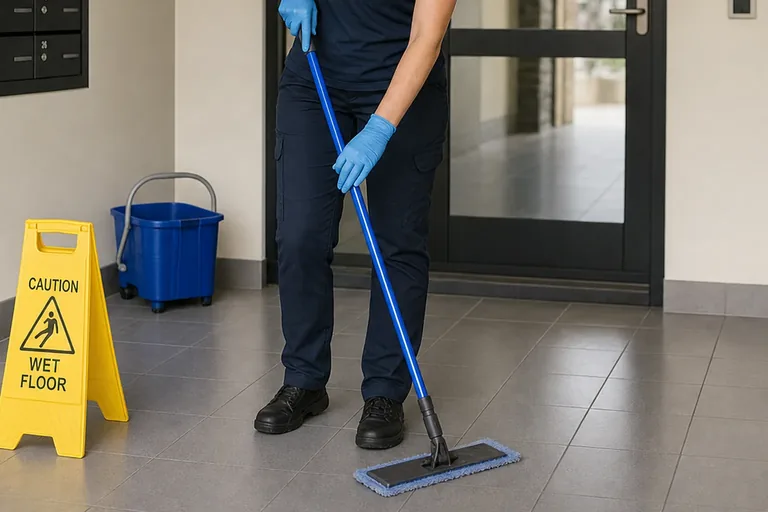
A useful strata cleaning checklist starts with the spaces residents share: entrances, corridors, stairs, lifts and any included amenities. It should show what needs cleaning, how often, and who to contact when a spill, obstruction or maintenance problem appears between visits.
The best checklist is specific to the building. A small block with an open stairwell needs a different plan from apartments with enclosed corridors, a lift and a shared bathroom. Use the areas below to build a scope, then leave out anything your property does not have.
Start at the entrance and follow the resident’s route
Walk from the street or car park to the individual unit entrances. This shows where outside dirt enters, which surfaces people touch and which corners are easy to miss when the checklist only says “clean common areas”.
For the entrance and lobby, consider:
- Accessible entrance glass and visible fingerprints.
- Door handles, entry surrounds and agreed intercom surfaces.
- Entrance mats and the floor beneath them where safely accessible.
- Letterbox exteriors, reachable ledges and skirtings.
- Loose dirt and debris in the agreed entry area.
Name the boundary between the shared entry and private property. An individual resident’s doormat, stored belongings or balcony should not become part of the job simply because it is nearby.
Cover stairs, corridors and lifts clearly
A corridor scope can include vacuuming or suitable hard-floor cleaning, reachable ledges, skirtings and agreed spot cleaning of marks. On stairs, identify the treads, landings, handrails and edges that need attention. Long corridors and several flights of stairs affect the work even when the building has relatively few units.
Where there is a lift, agree cleaning of the cabin floor, suitable internal surfaces, mirrors and accessible controls. Lift faults and anything inside its machinery are maintenance matters for the building’s service provider.
Add shared toilets, kitchens or laundries by room. “Amenities” is too broad if one person expects a bathroom clean and another expects appliances and cupboard interiors as well.
Set frequency by what happens between visits
Look at the state of the building before the next scheduled clean, not only immediately afterwards. Entrances exposed to wet shoes or wind-blown leaves may need attention sooner than a quiet upper corridor. Move-ins, furniture deliveries and building work can also change what the next visit needs to cover.
Choose a starting routine, then review whether it keeps up with use. Routine detail should have a place in that schedule. Reachable ledges and skirtings are easy to postpone if the instruction is only to do them when time remains.
Residents also need a contact for an urgent spill between scheduled visits. Agree who receives the report and what the building’s immediate response should be; a recurring clean is not an emergency attendance arrangement.
Plan access while people are using the building
Unlike an office, a residential building rarely has a time when everybody has left. Discuss quieter service windows, lift use, noise and how residents can move through the space during cleaning.
Wet floors, loose mats and objects in walkways deserve specific attention. WorkSafe Tasmania’s slips, trips and falls guidance recommends cleaning procedures, reporting problems and keeping walkways clear. The building’s access arrangements should allow the cleaning to happen without leaving equipment or supplies across a passage.
Separate cleaning observations from repairs
Make it easy to report a leaking tap, damaged floor edge, broken light or door that will not close properly. A short note identifying the location helps the property contact arrange the right response.
Our strata and common-area cleaning service focuses on the agreed shared spaces. Grounds maintenance, hazardous waste and specialist building work sit outside that service. Bring up bin areas and external glass during the inspection so we can assess their condition and safe access rather than leave the responsibility unclear.
Put one workable checklist in place
The final document only needs enough detail to make the arrangement clear:
- Shared areas and surfaces covered.
- Tasks at each visit and the schedule for regular detail.
- Access, storage and building contact details.
- How issues and changes are communicated.
- The agreed price and process for approving additional work.
We prepare cleaning scopes for properties in Hobart and Launceston. Send the number of floors, common areas, current cleaning arrangement and any priorities when you request a strata cleaning quote.
For glass around entrances, our guide to internal and external window cleaning scope helps you decide what to include. Our guide to choosing a cleaning service covers the wider questions to ask before booking.